



Treatment Guidelines
When evidence based treatments are used to guide treatment of substance misuse disorder, recovery is the EXPECTED outcome. When we use the "treatment of the moment", we can expect only the unexpected. Information about successful treatment guidelines can be found in the links on the left side of this page.
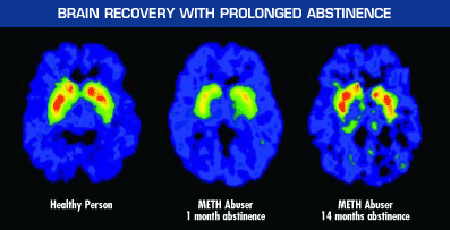
With the use of functional Magnetic Resonance Imaging (fMRI) and Positron Emission Tomography (PET) Scans, the areas of the brain affected/involved by the substances abused and the disease of addiction, have been discovered. These and other techniques are allowing medical science, through research, to understand and treat this devastating disease.
Alcohol and other addictions are devastating for anyone, but for a licensed professional in any field, addiction not only affects one’s personal life, but their professional life as well.
Licensed professionals such as physicians, lawyers, dentists, nurses, teachers, etc., can find hope and the ability to reclaim their lives when they seek treatment at a facility familiar with their needs.
When treated aggressively and appropriately, these individuals may be able to save their career as well.
The consequences of addiction for professionals who require a license to "practice" can be devastating, not only for themselves and their family, but for the clients to whom they render their services.
When choosing a treatment facility for health care professionals, the unique set of circumstances associated with their specialty can be major obstacles in successfully reaching long term recovery. Just as you can't treat adolescent addicts the same way you treat geriatric clients, you can't use a "general practice" protocol for someone who requires a specialist.
The Peer Assistance and Practitioner Wellness Committee is charged with evaluating a variety of programs in Ohio as well as nationwide, to determine if they meet the criteria for the addicted anesthesia clinician.
A treatment facility's staff work's closely with the patient in developing a healthy recovery program within their professional role and address the requirements mandated by their respective licensure and monitoring boards. The Ohio Board of Nursing has not responded to my request for a list of approved treatment facilities. I'll post it as soon as it arrives.
Alcohol and drug addiction can affect anyone, including professionals.
Treatment by a qualified facility can help you restore the quality of your life both at home and in the office.
Substance misuse and addiction are diseases that can be treated successfully when recognized early and treated aggressively. Delaying intervention and treatment can cost lives.
Treatment Facilities with Programs for Health Care Professionals
Talbott Recovery Campus Professional’s Program
Shepherd Hill Health Care Professional’s Program
Hazelden’s Program for Health Care Professionals Newberg, OR
Hazelden’s Program for Health Care Professionals Center City, MN
Resurrection Health Care Professionals Program
SAMHSA's Substance Abuse Treatment Facility Locator
SAMHSA National Helpline
Call: (800) 662-HELP (4357)
(English and Español)
(800) 487-4889 (TDD)
National, toll-free referral service for locating drug and alcohol abuse treatment programs that is operated by SAMHSA’s Center for Substance Abuse Treatment.
MEDICATIONS USED TO TREAT DRUG ADDICTION
Tobacco Addiction
- Nicotine replacement therapies (e.g., patch, inhaler, gum)
- Bupropion
- Varenicline
Opioid Addiction
- Methadone
- Buprenorphine
- Naltrexone
Alcohol and Drug Addiction
- Naltrexone
- Disulfiram
- Acamprosate
Copyright © Peer Advocacy for Impaired Nurses, LLC, 2008- 2011 All Rights Reserved.
Cognitive Behavioral Therapy. Seeks to help patients recognize, avoid, and cope with the situations in which they are most likely to abuse drugs.
Motivational Incentives.
Uses positive reinforcement such as providing rewards or privileges for remaining drug free, for attending and participating in counseling sessions, or for taking treatment medications as prescribed.
Motivational Interviewing.
Employs strategies to evoke rapid and internally motivated behavior change to stop drug use and facilitate treatment entry.
Group Therapy.
Helps patients face their drug abuse realistically, come to terms with its harmful consequences, and boost their motivation to stay drug free. Patients learn effective ways to solve their emotional and interpersonal problems without resorting to drugs.



| Stigma |
| Articles |
| ANA Resolution |
| Scott - Addiction |
| Scott - Intervention |
| Scott - Treatment |
| Scott - Aftercare |
| Mentoring |
| Recovery Model |
| Stages of Recovery |
| Early Addiction Recovery Services |
| Signs and Symptoms |
| Intervention |
| Treatment |
| Remission |
| Relapse |
| Different Addictions |
| Assessment Tools |
| Wellness |
| Attorney |
| Alabama - Illinois |
| Indiana - North Dakota |
| New Hampshire - Wyoming |
| Nursing's Response |
| Nurse Support Groups |
| Recommended Books |
| Online Support |
| To The Addicted Nurse |